
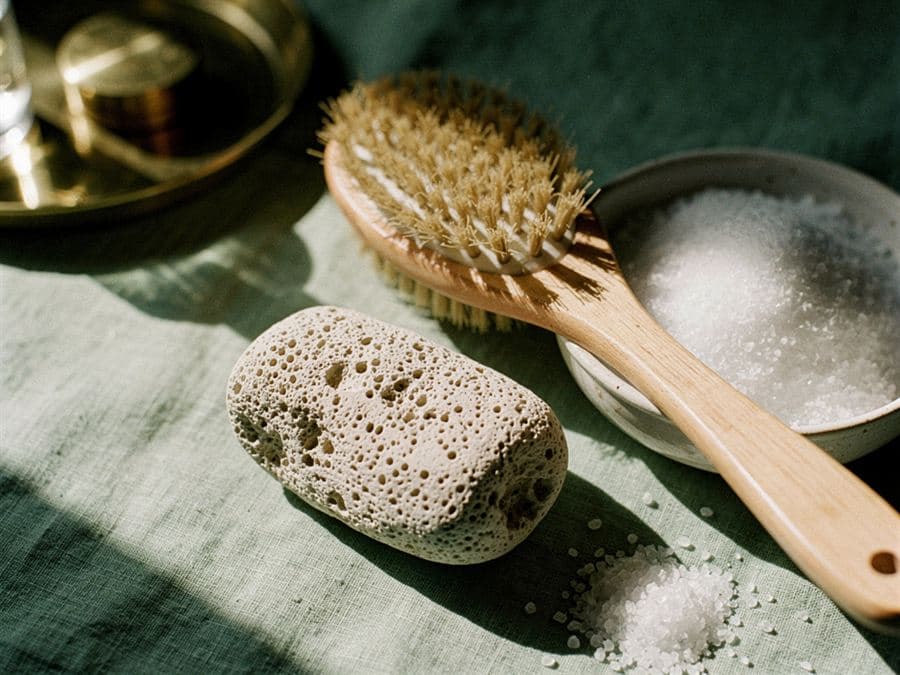
Calluses are hard thickened areas on the feet which result from the accumulation of layers of dead skin on the foot. Sometimes they can become quite large. Calluses occur when continuous or prolonged pressure is applied for a long time to a particular part of the foot. This eventually cuts off the circulation, and so the skin layers die. As the dead skin piles up a callus forms. The most common sites are the heels, which bear most of the weight of the body. Some calluses are deeply seated due to excessive pressure, and may cause pain and discomfort and even restrict your mobility. Some primary factors that cause calluses to form are obesity, high heeled shoes, flat feet, high arched feet and deformed feet. . Natural Remedies and Prevention
There are many natural remedies and preventions for treating calluses. But the most important step is to first eliminate the root cause of the formation of calluses.
Appropriate Body Weight - Maintain an ideal body weight so that your feet do not have to bear excessive pressure and strain.
Avoid improper shoes - Women especially need to use the right footwear. Avoid using uneven shoes, high heels or sloping platform shoes. Wearing this kind of footwear for a long time can seriously and permanently damage the structure of your feet. You might later require surgery for correction.
Padded footwear - Use padded or orthotic footwear which help to distribute foot pressure evenly over your feet, providing safe support. You will find that once the pressure on the calluses is taken off, they will slowly heal by themselves.
Moisturize your feet - Apply moisturizer generously and scrub off the dead skin after a long warm water soak, so that the calluses are gradually removed layer by layer. If you have patience and the will to take care of your feet you can treat your own calluses in the privacy of your own home.
You should never ever try to cut off the dead skin with a blade or other sharp instrument. It could lead to the introduction of infection, either bacterial or fungal, and lead to a non-healing wound. Diabetic beware.
Do you like going to the beach? Walking on wet sand can work well. Wet sand acts as an abrasion that will help removal of layers of dead skin which causes corns and calluses.
Corns and calluses treatment using baking soda - Add 1 tablespoon of baking soda to a foot spa, basin or anything your feet can soak in. Fill it half way with warm water and soak your feet for at least half an hour. Then with a pumice stone carefully file away the hardened skin.
Treating the foot calluses with aspirin: Grind six aspirin tablets into a powder. Add 1/2 teaspoon of lemon juice, and 1/2 teaspoon of water. Stir the mixture together until you have a thick paste. Apply the paste to the calluses, and then wrap your foot in a warm towel, and then place it inside a plastic bag. The combination of the warmth and the paste will begin to break down the calluses. Leave your foot inside the bag for 15 minutes. Remove the bag and towel, the calluses will now be extremely soft. Now you can file them down successfully with an emery board or pumice stone. Epsom salt: Another good way to soften calluses and corns is to soak them in water containing epsom salt. A few table spoons in a foot spa basin. Soak for 10-15 minutes will help soften calluses. Also helps with odor.
Vinegar: Cotton balls soaked in vinegar then taping to the corn or callus. Allow the vinegar-soaked cotton to stay on overnight. In the morning, the area will be soft, then rub with a pumice stone. Be careful not to be overly aggressive when using the pumice stone.
Cornstarch: To help reduce some of the discomfort from calluses, sprinkle cornstarch on your feet to keep the area dry and protect the skin from breaking down. Moisture will make the calluses feel more uncomfortable and will promote fungal infections. Cornstarch will reduce this moisture significantly. This will also reduce odor as a bonus.
What you’ll need
This is natural-care information for general guidance only — it is not medical advice. For severe, worsening, or diabetic foot problems, please see a doctor.