
Diabetic feet need extra care. Even small foot problems can become serious for people with diabetes. Always check with your doctor before treating a foot issue at home.
The treatment of diabetes-induced foot ulceration involves a four-pronged approach. First, the infection must be treated. Second, it must be determined whether any underlying ischemia of the foot can be rectified through surgery. Third, mobility and trauma to the ulcerated portion must be kept to a minimum. Finally, and very importantly, the wound should be dressed and treated by removing calluses, applying a topical cream, and dressing the wound. This will greatly improve the condition of the wound and enable it to heal faster. Also, it will inhibit the growth of bacteria and prevent further progression of the ulcer.
Let us now examine the treatment methodologies in greater detail.
Elimination of Infection
Eliminating the bacteria causing the infection is the first important step in the treatment of diabetic ulceration. The antibiotics used in eradicating the infection will depend on the biology of the organisms that are causing the infection. An effective combination used by many medical practitioners comprises penicillinase and aminopenicillin. Other options include quinolones along with clindamycin and metronidazole. Soft tissue infections are best treated intravenously using gentamicin and imipenem. Some bacteria such as Staphylococcus aureus are resistant to most antibiotics but can be successfully treated using rifampicin, vancomycin, teicoplanin, or linezolid.
The above-stated combination of antibiotics has also proven to be successful in the treatment of osteomyelitis or bone infections. However, when the infection has penetrated deep into the bones, the removal of that portion of bone may be necessary to prevent the further progression of osteomyelitis. For a deep-rooted infection caused by severe ischemia, intravenous administration of antibiotics has been shown to be more effective when they are taken by the oral route.
Rectifying Vascular Disease Surgically
Clinical evidence suggests that it is possible to rectify ischemia and other heart diseases induced by diabetes surgically. These possibilities are assessed by non-invasive tests that include measuring the ankle to foot pressure ratio. If the pressure ratio is below 0.8, surgical correction of the underlying ischemia is often possible. Ultrasonography of the affected area is another effective way to assess the possibility of surgical correction. The most commonly used surgical procedures for the correction of ischemia include angioplasty, bypass surgery and thrombolysis. Another common procedure that is coming into wide use in recent times is a distal bypass. Corrective surgery has been proven to be the best way to prevent amputation.
Cast Off-Loading of Wound
Asking the patient to remain inactive until the wound heals is not good practice, apart from being impractical in many cases. Immobility may lead to still more complications such as muscle wasting, depression, and, in more severe cases, the formation of blood clots inside the blood vessels, which is called thrombosis, as well as the spread of ulceration to other parts of the body. That is why medical practitioners have wisely come up with a procedure to off-load the wounded foot. This means taking the body weight off the foot using orthotic devices such as fiberglass casts. This enables the patient to move about while successfully reducing the trauma on the affected foot, allowing the foot to heal gradually. Orthotic devices greatly reduce pressure on the affected limb and have proven to be effective in hastening healing, if worn constantly by the patient.
Management of the Ulcer
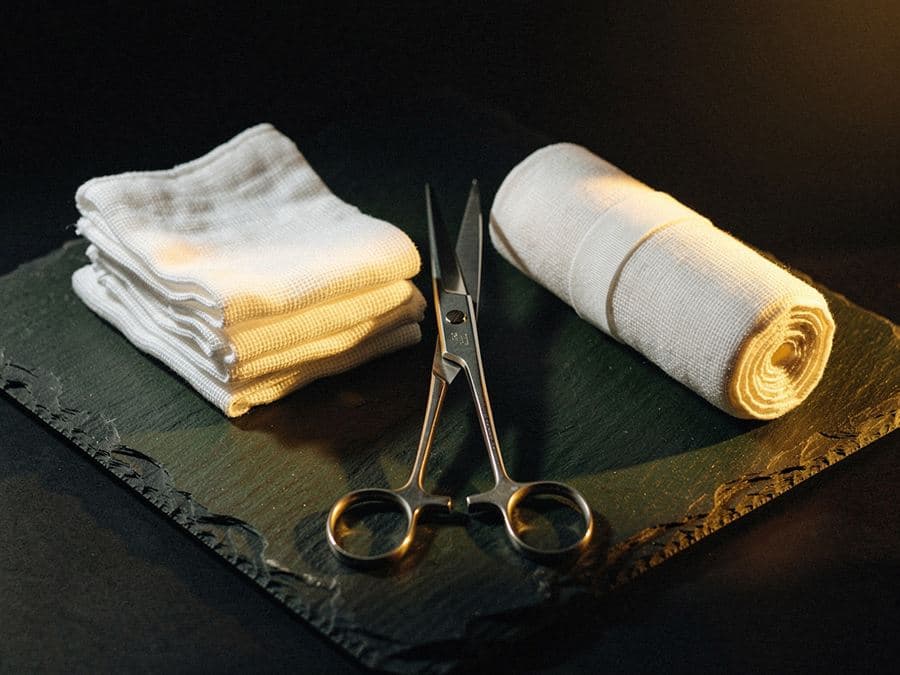
A wound bed preparation is one of the best ways to ensure successful healing of the ulcer. It prevents the growth and multiplication of bacteria, limits production of discharge, containing abnormal cells, and reduces the formation of necrotic tissue. Ulcers have been found to heal faster when debridement (the removal of dead and damaged tissue in the wound) is done. This enables the healthy tissue in the area to regenerate faster. In most cases, surgical excision or removal of dead tissue is done. This facilitates the complete healing of most wounds within a month or two. Antiseptics such as silver and iodine must be applied regularly on the affected area. Foot compression devices have been found to be effective in controlling edema or the accumulation of water in the area. Surgical dressings protect the affected area from further injury and infection, while providing a warm environment for the damaged tissue to regenerate and repair itself. The surgical dressings which have proved most effective include foams, hydrogels, alginates, and hydrocolloids.
Diabetes is a severe metabolic disease that affects the heart, which is undoubtedly among the most important organs in the body. Ischemia, or damage to the body cells caused by poor blood supply to a part of the body, not only contributes to the onset of feet ulceration, but also increases the risk of a heart attack, and death by other vascular-related complications. Thus, after the successful healing of a foot ulcer, the medical practitioner treating them should come up with a well-coordinated program that would prevent and reduce the risk of ulceration in the future. We shall discuss ways and means to successfully control and prevent the recurrence of diabetic ulceration in the next chapter. 31 31