
Feet Naturally — natural steps, better health
The shelf
12
Mineral

Sea Salt

Exfoliates, draws out, heals

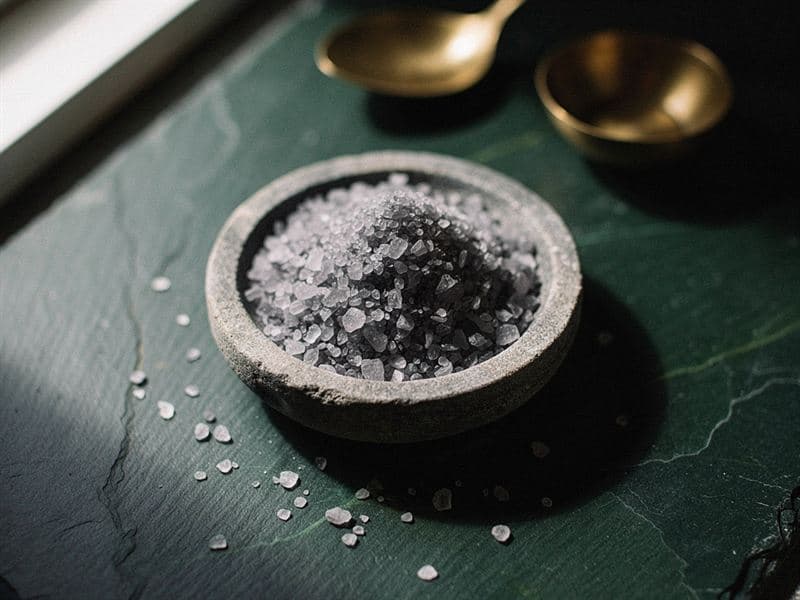
Sea Salt — still life

Sea salt is evaporated seawater, and unlike refined table salt it keeps the trace minerals — magnesium, calcium, potassium — that were dissolved alongside the sodium. The coarse grain is the point: it is abrasive enough to lift dead skin, which table salt, being fine, is not.

Three properties make it useful on feet. It exfoliates, taking off the dull built-up layer that makes heels look grey. It draws fluid out of swollen tissue by osmosis. And salt water is mildly antiseptic, which is why it has been used to clean minor wounds for as long as people have lived near the sea.

Epsom salt and sea salt are often used interchangeably, but they are not the same. Epsom is magnesium sulphate and better for aches; sea salt is sodium chloride and better for scrubbing.

How to use it

  1. 1

    Exfoliating scrub

    Two tablespoons of coarse sea salt into a tablespoon of olive or coconut oil. Massage over damp feet in circles, heels and balls especially, then rinse well.

  2. 2

    Deodorising soak

    A quarter cup into a basin of warm water, fifteen to twenty minutes. Also useful for softening skin before you tackle hard heels.

  3. 3

    Minor cuts and grazes

    A weak warm salt solution to bathe a small cut. Clean, then dry properly.

Before you use it

  • Salt in an open crack or fissure stings sharply. Wait until it has closed.
  • Do not scrub hard. The scrub should lift dead skin, not sand living skin away.
  • Diabetics should not use abrasive scrubs on their own feet at all — ask a podiatrist.
Feet Naturally — book cover
From the book

Feet Naturally

The original book this guide is built from — 30 common foot problems and the natural remedies for them.

Share this

This is natural-care information for general guidance only — it is not medical advice. For severe, worsening, or diabetic foot problems, please see a doctor.